Preventing Smart Plug Overload When Cycling Space Heaters
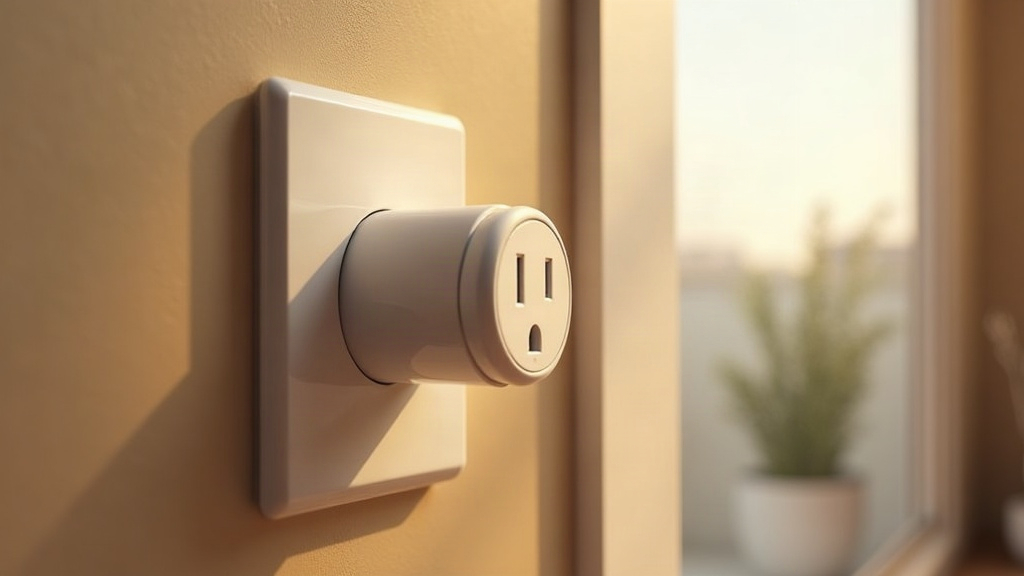
Why Smart Plugs Struggle With Space Heaters
Most space heaters pull somewhere between 1,200 and 1,500 watts. On a standard 120V circuit, that works out to roughly 10 to 12.5 amps, uncomfortably close to (or flat-out over) the ceiling of many smart plugs on the market. Those plugs were designed with lamps, fans, and small electronics in mind, things that draw maybe 3-5 amps on a good day. A space heater is a completely different animal.
Cycling makes the situation worse, not better. Here’s why:
- Inrush current spikes. Resistive heating elements don’t ease into their draw. They slam the relay with a brief current spike the instant power turns on, and that spike is harder on the internals than steady operation would be.
- Relay wear from frequent switching. Think about a thermostat cycling a heater every few minutes through a cold snap. Over a season that’s thousands of extra on/off cycles, way beyond what a plug built for a reading lamp was ever tested against.
- Heat buildup inside the housing. Switching a high-current load repeatedly generates heat, and that heat has to go somewhere. In a small plastic shell, especially one jammed behind a nightstand or wedged against a wall, it just builds up.
Signs Your Smart Plug Is Overloaded
If you’re cycling a heater through a smart plug, check for these the first few times you use it, and then periodically after:
- The plug or the outlet itself feels warm, or outright hot, after a cycle
- A faint plastic or burning smell near the wall
- The plug drops off Wi-Fi randomly, or stops responding to app commands
- Any discoloration or melting on the plug body or the outlet faceplate
- The heater’s own overheat cutoff trips more often than it used to
Catch any of these and stop immediately. Unplug it, check the cord and outlet for damage, and don’t plug that heater back into that plug until you’ve figured out what went wrong.
How to Prevent Overload
1. Match the Plug Rating to the Heater’s Draw
Only buy smart plugs explicitly rated for 15A / 1800W or above. Check the heater’s nameplate wattage first, it’s usually stamped right on the back or bottom of the unit. A plug capped at “10A max” has no business running a 1500W heater, not even for a few minutes.
2. Avoid Short Cycle Intervals
Set your thermostat or automation so the plug isn’t switching more than once every 5 to 10 minutes. A poorly tuned temperature trigger that fires every 30-60 seconds will chew through relay life far faster than any manufacturer tested for in the lab.
3. Plug Directly Into the Wall
Skip the extension cord. Skip the power strip. Skip the surge protector too. Every extra connection point is a place where contacts can loosen, arc, or overheat once you’re pushing heater-level current through them.
4. Use a Plug With Built-In Overload Protection
Look specifically for:
- Automatic thermal shutoff
- Overcurrent protection
- UL or ETL certification that’s been tested with heating appliances, not just general small-electronics use
5. Give the Plug Room to Breathe
Don’t bury it behind furniture or tuck it under a rug. Airflow around the housing is what carries away the heat generated every time the relay switches.
6. Monitor Energy Use if Your Plug Supports It
A lot of smart plugs show real-time wattage in their app. Keep an eye on it. If you see spikes above the plug’s rated capacity, even brief ones, that’s your cue to upgrade to a higher-rated model or move the heater to its own dedicated circuit.
Better Alternatives for Heavy Cycling
Running heat through a whole winter in a consistently cold room? A plug-in smart switch might not be the right tool at all. Consider instead:
- A heater with a built-in smart thermostat. Plenty of newer models have this already, which removes the plug entirely from the equation.
- A heavy-duty smart relay or in-wall smart switch, rated for continuous high-amp loads and installed by a licensed electrician.
- A dedicated 20A circuit paired with a hardwired smart switch instead of anything plug-in.
Conclusion
Smart plugs are convenient, no argument there. But space heaters push most consumer-grade plugs right up to, or past, their safe operating limits, and frequent cycling only accelerates the problem. Pick a plug rated comfortably above the heater’s wattage, spread out the cycle intervals, plug straight into the wall, and pay attention to warmth or odor as early warning signs. If you’re heating the same cold room night after night all winter, a hardwired smart switch or a heater with its own thermostat is the more durable fix.